AI for Non-Human Animal Communication
The past few years have seen an unprecedented surge in both the availability of bioacoustic data and the sophistication of AI/machine learning models. This convergence presents a unique window of opportunity to revolutionize our understanding of animal communication and biodiversity. However, achieving this requires a conscious effort to integrate the disciplines of AI/Machine Learning and Ethology.
This workshop will explore the intersection of artificial intelligence (AI) and bioacoustics, aiming to address challenges in processing complex bioacoustic data and interpreting animal signals in order to advance our understanding of non-human animal communication. Join us for a poster session, keynote talks and a panel discussion as we explore key opportunities to use AI to decipher animal languages and thus deepen our understanding of the natural world.
Workshop Schedule
| Time | Event |
|---|---|
| 09:00 - 09:45 | Coffee Provided |
| 09:00 - 09:15 | Opening Remarks |
| 09:15 - 10:15 | Plenary Talk by Laela Sayigh |
| 10:15 - 11:15 | Lightning Talks: Part 1 |
| 11:15 - 11:30 | Break |
| 11:30 - 12:30 | Plenary Talk by Oisin Mac Aodha |
| 12:30 - 14:00 | Poster Session & Lunch |
| 14:00 - 15:00 | Lightning Talks: Part 2 |
| 15:00 - 15:15 | Break |
| 15:15 - 16:15 | Final Plenary Talk by Julie Elie |
| 16:15 - 17:00 | Panel |
| 17:00 | Conclude |
Keynote Speakers
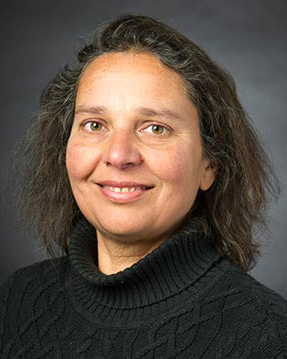
Dr. Sayigh is a leading expert in cetacean behavior and communication, with over 5,000 citations of her work. She holds a Ph.D. from the MIT/WHOI Joint Program and has dedicated her career to understanding the social behavior and acoustic communication of whales and dolphins. She has been involved with a long-term study of bottlenose dolphins in waters near Sarasota, Florida, for many years, where her work has focused on individually distinctive signature whistles and other aspects of dolphin communication.
Recently, this research has involved playback experiments to free-swimming dolphins, filmed with drones. Given the challenges of studying species that spend most of their lives underwater, she is involved in research that utilizes new technologies, such as non-invasive tags, to study cetacean communication systems.

Oisin Mac Aodha is a Reader (aka Associate Professor) in Machine Learning in the School of Informatics at the University of Edinburgh (UoE). He was a Turing Fellow from 2021 to 2025, currently is an ELLIS Scholar, and a founder of the Turing interest group on biodiversity monitoring and forecasting. His current research interests are in the areas of computer vision and machine learning, with a specific emphasis on 3D understanding, human-in-the-loop methods, and AI for conservation and biodiversity monitoring.
From 2016-2019 he was a postdoc in Prof. Pietro Perona's Computational Vision Lab at Caltech working with the Visipedia team. Previous to Caltech, he spent three years (2013-2016) as a postdoc in the Department of Computer Science at University College London (UCL) with Prof. Gabriel Brostow and Prof. Kate Jones. There he worked on interactive machine learning, where the goal was to design algorithms to enable non-programming scientists to semi-automatically explore events of interest in vast quantities of audio and visual data.
He did both his MSc (with Dr. Simon Prince) and PhD (with Prof. Gabriel Brostow) at UCL and has an undergraduate degree in electronic engineering from the University of Galway in Ireland. Before his PhD, he was a research assistant for one year in Prof. Marc Pollefeys' group at ETH Zurich.
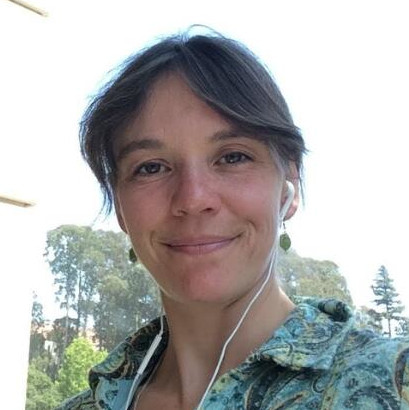
Dr. Elie is a computational neuroethologist specializing in the neural mechanisms underlying vocal communication in animals. With over 1,400 citations, her work bridges ethology, bioacoustics, neurobiology, and computational neuroscience. She has made fundamental contributions to understanding how animals produce and perceive entire vocal repertoires, particularly in zebra finches and Egyptian fruit bats – both vocal learning species.
Her research combines rigorous behavioral experiments, neural recordings (including wireless recordings from freely behaving animals), and sophisticated computational analyses to decode how the brain represents and processes communication signals. Her work addresses core questions about individual recognition, the relationship between acoustic structure and meaning, and how neural circuits enable flexible vocal production and categorical perception across diverse call types.
Lightning Talks
Part 1
-
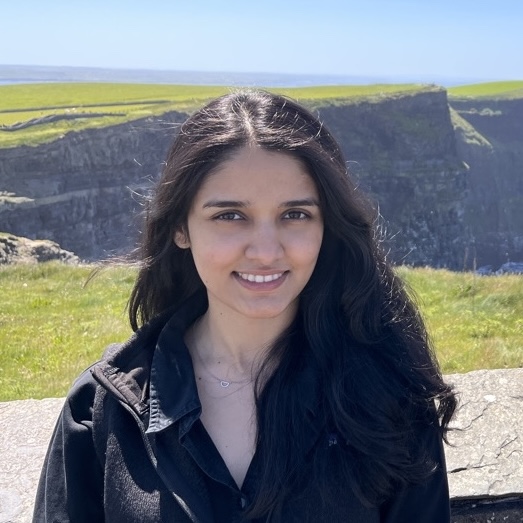 Pratyusha Sharma
 -

 Adam Chareyre & Haodong Zhang
 -
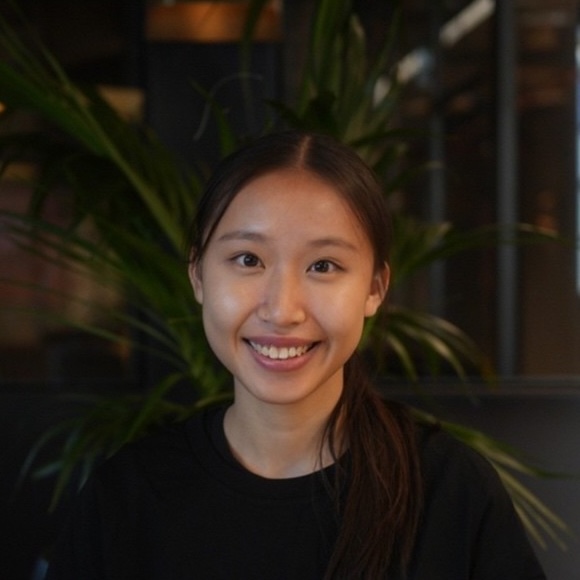 Julia Tan
 -
 Felipe Parodi
Part 2
-
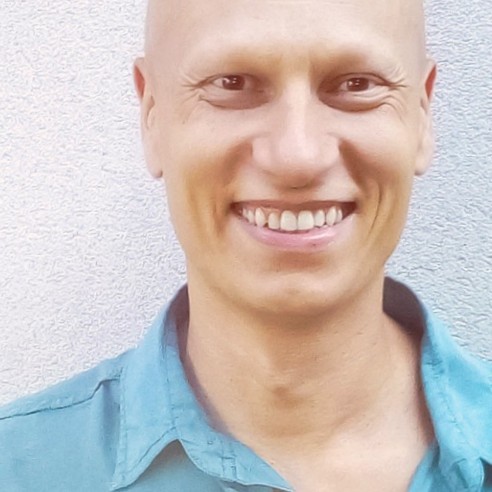 Luigi Assom
 -
 Umesh Singla
 -
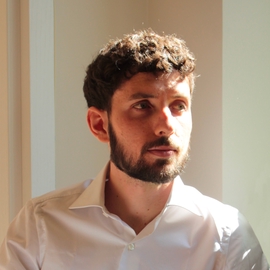 Donato Crisostomi
 -
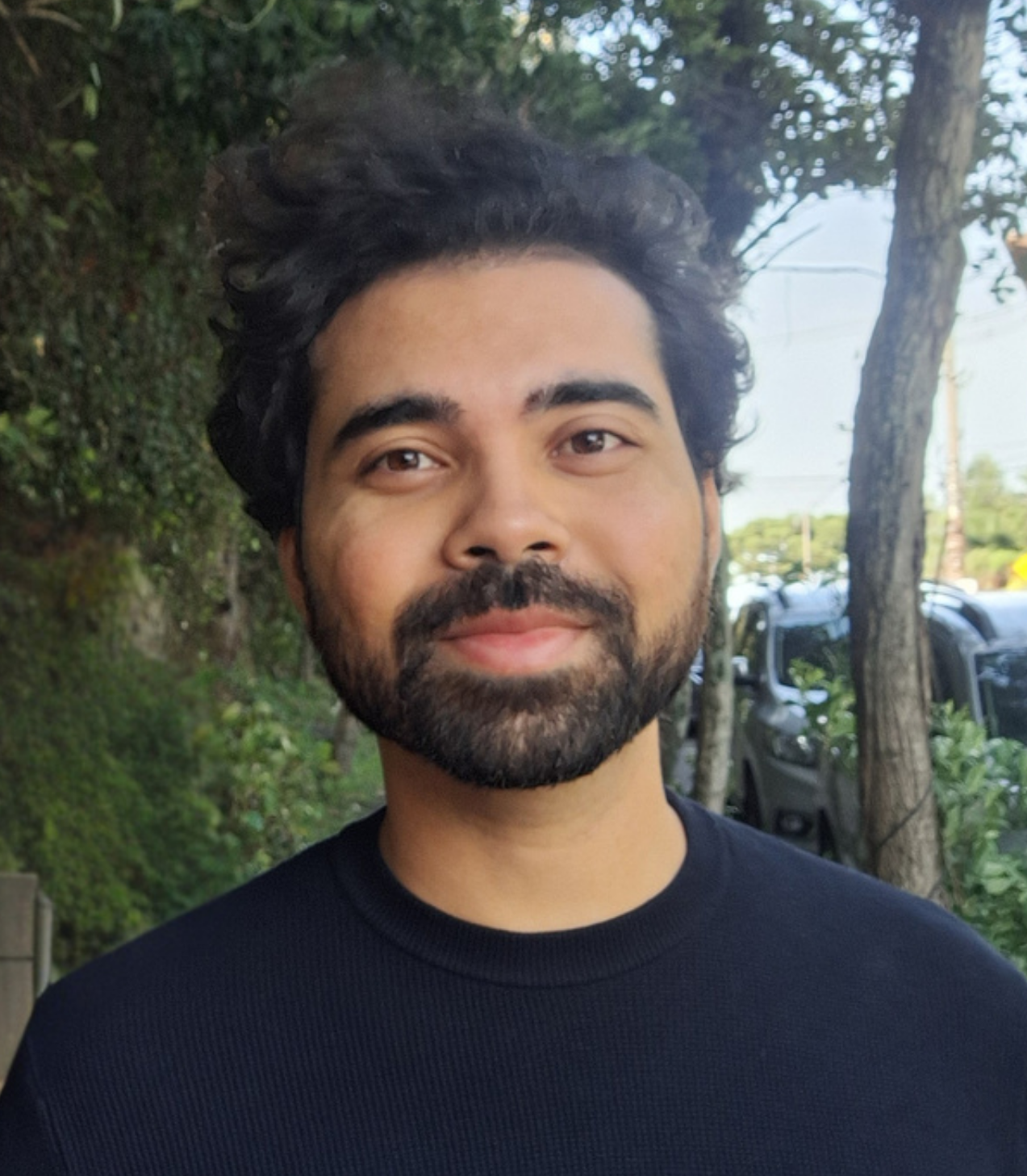 Alef Iury Siqueira Ferreira
Accepted Papers
- A Functionalist Framework for Machine Learning in Animal Communication – Jack Terwilliger, Stephan Paul Kaufhold, Federico Rossano
- A Practical Audio Preprocessing Approach for Multi-Species Sound Classification – Juan J. Diaz, Santiago J. Vargas, Isabella Bermón, Maria J. Guerrero
- A Whisker of Truth: A Multimodal Interdisciplinary Machine Learning Approach to Vocal, Visual, and Tactile Signals in the Domestic Cat – Astrid van Toor, Elin N Hirsch, Susanne Schötz
- AI Decodes Chimpanzee Vocabulary Items – Antoine Valet, Quentin Bacquelé, Cedric Girard-Buttoz, Roman M. Wittig, Catherine Crockford
- AI for Animal Pain Assessment: a New Challenge for Bioacoustics – George Martvel, Annika Bremhorst, Mayara Travalini de Lima, Stelio Pacca Loureiro Luna, Anna Zamansky
- An Expert-in-the-Loop Toolbox for Explainable AI in Animal Communication – Álvaro Vega-Hidalgo, Artem Abzaliev, Nicole Guisneuf, Thore Bergman, Rada Mihalcea
- Associative Syntax and Maximal Repetitions reveal context-dependent complexity in fruit bat communication – Luigi Assom
- AudioSAM: Automated Annotation of Bioacoustic Soundscapes in the Wild – Zachary Baker, Reece S Shuttleworth, Daniela Rus, Antonio Torralba, Jacob Andreas, Pratyusha Sharma
- Beyond Species-Based Assessments: Automatic Acoustic Recognition of Pollinator Function – Alef Iury Siqueira Ferreira, José Mesquita-Neto, Nádia Félix Felipe da Silva, Thierson Couto Rosa
- BirdAVES in the wild: individual recognition as a step toward zebra finch communication networks – Aneesh Chauhan, Hugo Loning, Evelien ter Avest, Bhavya Botta
- CHAT Jr: Wearable Bioacoustics System For Two-Way Communication Research Between Humans and Cetaceans – Charles Ramey, Thad Starner, Mark Hamilton, Denise L Herzing
- Decoding gray wolf (Canis lupus) communication at scale in Yellowstone National Park – Amir Dehbi, Daniel Stahler, Matthew C. Metz, Kira A Cassidy, Jeffrey T Reed, Jeremy SunderRaj, Taylor L. Rabe, Brett Melbourne, Joanna E. Lambert
- Dolph2Vec: Self-Supervised Representations of Dolphin Vocalizations – Chiara Semenzin, Faadil Mustun, Roberto Dessi, Pierre Orhan, Gonzalo G. de Polavieja, Yair Lakretz, German Sumbre
- Fear-Driven Collective Topology: Comparing Smart-Boid Vietoris–Rips Graphs to Animal Communication Networks via Persistent Features – Guilherme S. Y. Giardini, Carlo R. da Cunha
- Fighting Poaching Through Targeted Deep Learning and Sensor Integration – Naveen Dhar, Irina Tolkova
- From Pretrain to Primate: Decoding Chimp Nocturnes for Wellbeing – Lara Narbona Sabaté
- HAC-Net: Learning Natural Units from Acoustic Change – Quentin Bacquelé, Frederic Theunissen, Mathevon
- Hierarchical Representation Learning of Dog Behavior via Single-View 3D Pose Estimation – Nanako Miyai, Takatomi Kubo, Maaya Saito, Kazunori Ohno, Takefumi Kikusui, Miho Nagasawa, Kazushi Ikeda
- Keypoint Annotation for Electrocommunication Source Separation with PIKAChU and RAIChU – Kaden Zheng, Sonja Johnson-Yu, Satpreet Harcharan Singh, Denis Turcu, Federico Pedraja, Pratyusha Sharma, Naomi Saphra, Nathaniel Sawtell, Kanaka Rajan
- Latent state dynamics in female Drosophila during social interactions – Umesh Singla, Albert Lin, Jonathan W. Pillow, Mala Murthy
- Marine Mammals Recognition: a Multi-Modal Framework for Bioacoustic Monitoring – Amine Razig, Soulaymani Youssef, Loubna Benabbou, Pierre Cauchy
- Model Merging Improves Zero-Shot Generalization in Bioacoustic Foundation Models – Davide Marincione, Donato Crisostomi, Roberto Dessi, Emanuele Rodolà, Emanuele Rossi
- Pawgaze: A Benchmark for Fine-Grained Multimodal Analysis of Canine Behavior – Khush Attarde, Divye Bhutani
- Perch 2.0 transfers 'whale' to underwater tasks – Andrea Burns, Lauren Harrell, Bart van Merriënboer, Vincent Dumoulin, Jenny Hamer, Tom Denton
- PrimateFace: A Machine Learning Resource for Automated Face Analysis in Human and Non-human Primates – Felipe Parodi
- Proposal: Deciphering Electrocommunication with MARL and Unsupervised Machine Translation – Satpreet Harcharan Singh, Sonja Johnson-Yu, Zhouyang Lu, Aaron Walsman, Federico Pedraja, Denis Turcu, Pratyusha Sharma, Naomi Saphra, Nathaniel Sawtell, Kanaka Rajan
- QuadForecaster: Diffusion-Based Quadruped Pose Prediction for Animal Communication Analysis – Ian Noronha, Aneeq Chowdhury, Saru Bharti, Upinder Kaur
- Redefining Intelligence: From Anthropocentric to Relational AI-Species Communication – Kerri Lake
- Retrieval-Augmented Bioacoustics: Evidence-Guided Generation for Animal Communication – Bodhisatta Maiti
- Robust detection of overlapping bioacoustic sound events – Louis Mahon, Benjamin Hoffman, Logan S. James, Maddie Cusimano, Masato Hagiwara, Sarah C. Woolley, Felix Effenberger, Sara Keen, Jen-Yu Liu, Olivier Pietquin
- Scaling Frog Monitoring with FrogID: A Robust Classification Pipeline for Citizen Science Using Bioacoustic Foundation Models – Julia Tan, Jodi J. L. Rowley
- Self-Supervised vs Supervised Representation Learning for Fin Whale Vocalization Detection – Adam Chareyre, Haodong Zhang, Shuwen Ge, Randall Balestriero, Hervé Glotin, Paris Sebastien
- SongMAE: Fine-Grained Syllable Discovery in Birdsong Using Asymmetric Patches – George Vengrovski, Timothy J Gardner
- Soundscape Connectomes: Unsupervised Graph-Based Approach for Soundscape Mapping – Maria J. Guerrero, Aref Einizade, Jhony H. Giraldo, Victor M. Martinez-Arias, Claudia Isaza, Cesar A Uribe
- The Double Contingency Problem: AI Recursion and the Limits of Interspecies Understanding – Graham L. Bishop
- The responsible media representation of artificial intelligence for non-human animal communication – Caatje Kluskens
- Toward Multimodal Models of Animal Communication: Insights from New York City Rats – Ralph E Peterson, Dmitry Batenkov, Ahmed El Hady, Emily L Mackevicius
- Toward Visualization of EEG Signatures for Anomaly Detection in Dogs Using CEBRA – Natsuna Ishida, Takatomi Kubo, Hitomi Koike, Yuki Maruno, Maaya Saito, Kazunori Ohno, Toshitaka Yamakawa, Takefumi Kikusui, Miho Nagasawa, Yuichi Sakumura
- Towards Leveraging Sequential Structure in Animal Vocalizations – Eklavya Sarkar, Mathew Magimai Doss
- Understanding Electro-communication and Electro-sensing in Weakly Electric Fish using Multi-Agent Deep Reinforcement Learning – Satpreet Harcharan Singh, Sonja Johnson-Yu, Zhouyang Lu, Aaron Walsman, Federico Pedraja, Denis Turcu, Pratyusha Sharma, Naomi Saphra, Nathaniel Sawtell, Kanaka Rajan
- WhaleLM: Finding Structure and Information in Sperm Whale Vocalizations and Behavior with Machine Learning – Pratyusha Sharma, Shane Gero, Daniela Rus, Antonio Torralba, Jacob Andreas
Call for Papers
View: Submission Details, Tracks, and Evaluation Criteria
We invite short papers and proposals papers related to using AI for non-human animal communication. The following are some relevant areas for consideration, but proposals are not limited to these topics.
- Data
- Benchmarking and evaluation datasets
- Multimodal data
- Study designs for animal communications (passive/long duration versus cleaned specific examples versus experiments)
- Repositories and data sources
- AI advancements
- Bioacoustics
- Multimodal learning
- New model architectures
- Transfer learning
- Large-language models
- Unsupervised, self-supervised, or supervised models
- Applications and case studies
- Ecological impact and conservation monitoring
- Specific species studies
- Generalizability across species
- Communication and cognition
- Linguistics
- Information encoding
- Experimental design
- Ethics
Important Dates
October 1, 2025
Submission Portal
- Please use NeurIPS 2025 LaTeX style file for submissions.
- Submissions must be anonymized.
- The review process will be double-blind.
The submission deadline was September 5, 2025. Submissions are no longer being accepted.
Call for Reviewers
We also welcome applications to review, please express your interest to aiforanimalcomms@earthspecies.org.
Submission Tracks
We have two tracks for submissions of manuscripts: short papers and proposals. Submissions to this workshop are considered non-archival and thus may be submitted elsewhere in the future, but should represent novel work not previously published.
Papers Track
We welcome submissions of brief research papers that summarize the context, methods, and results of a study or set of experiments. Please limit your submission to 4 pages excluding references and supplementary materials. Reviewers will not be required to read or review the supplementary content and will evaluate the papers based on the main content. Papers should have the following components:
- Introduction/motivation - what is the study objective and why does it matter?
- Methodology - describe the methods and/or models used
- Results - summarize key findings
- Conclusions
Proposals Track
The proposals track is intended for articulating new ideas for research or forward-looking advancements that do not have finalized results, or for proposing how concepts from interdisciplinary or domain research would apply in AI development or applications in the domain of animal communication.
Evaluation Criteria
- Impact and significance of the research — Is the question well-motivated by prior research? Can the methods and findings be generalized to other species or studies? Does the research resolve a previously unresolved challenge in the use of AI?
- Collaboration — does the research involve collaboration with domain experts and scientists outside of the field of AI?
- Appropriateness of the methodology
- Clarity of communication
- Ethical considerations
FAQs
Can I submit work I've published previously?
Submissions should be novel work not previously published within machine learning conferences - however, new findings that build on prior work are welcome. We may consider new presentations of work previously published in applied scientific journals on a case-by-case basis as long as the findings were not previously published.
What happens if my submission is accepted?
We will be hosting a poster session and potentially a short series of talks on successful papers (the schedule for the day is still TBC). Please note that talks will take place in person; we are not able to support virtual presentations.
Who should I contact with questions?
Please reach out to aiforanimalcomms@earthspecies.org, cc ellen@earthspecies.org and we will get back to you.
Organizers
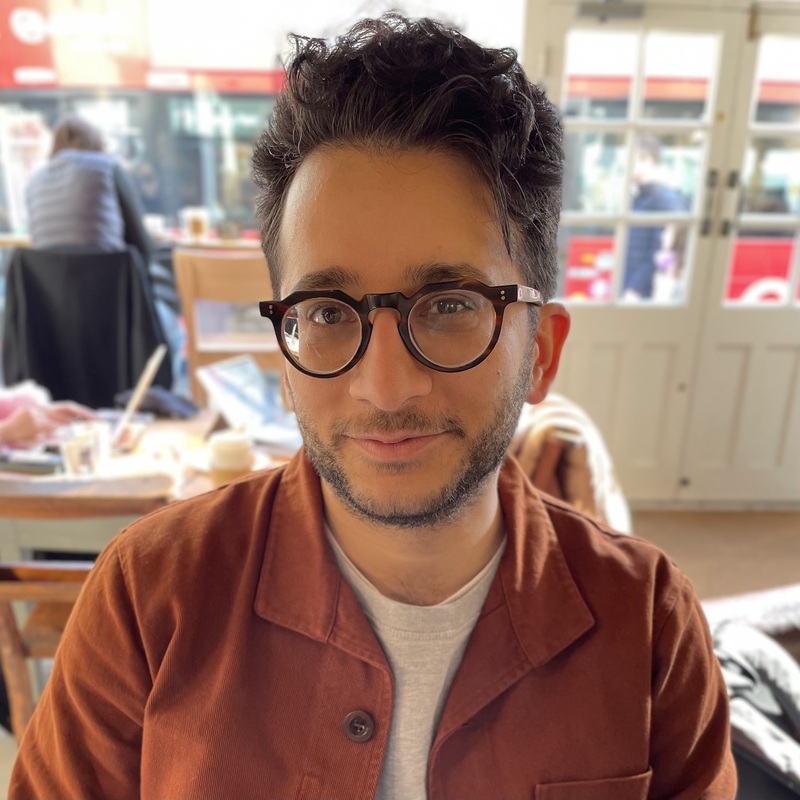
Emmanuel Chemla

Vincent Dumoulin
Ellen Gilsenan-McMahon
Lauren Harrell
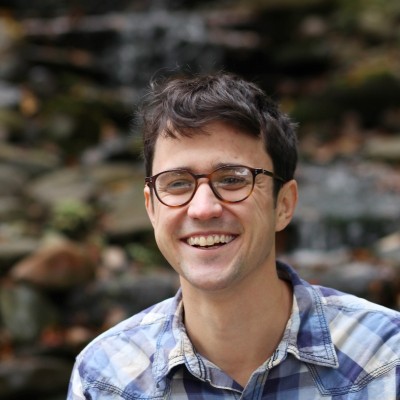
Benjamin Hoffman
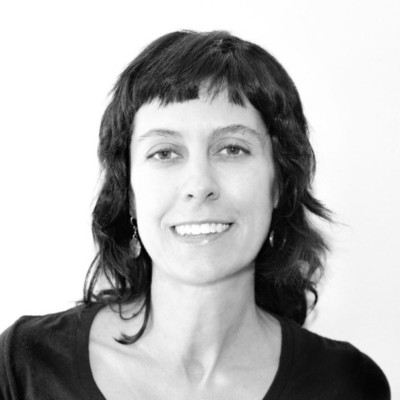
Sara Keen
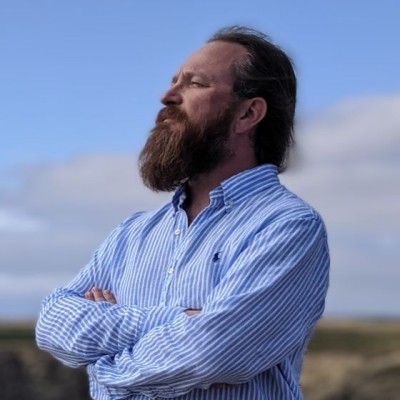
Olivier Pietquin
Contact Us
For any questions or further information regarding the workshop, please contact Ellen Gilsenan-McMahon.
Email: ellen@earthspecies.org